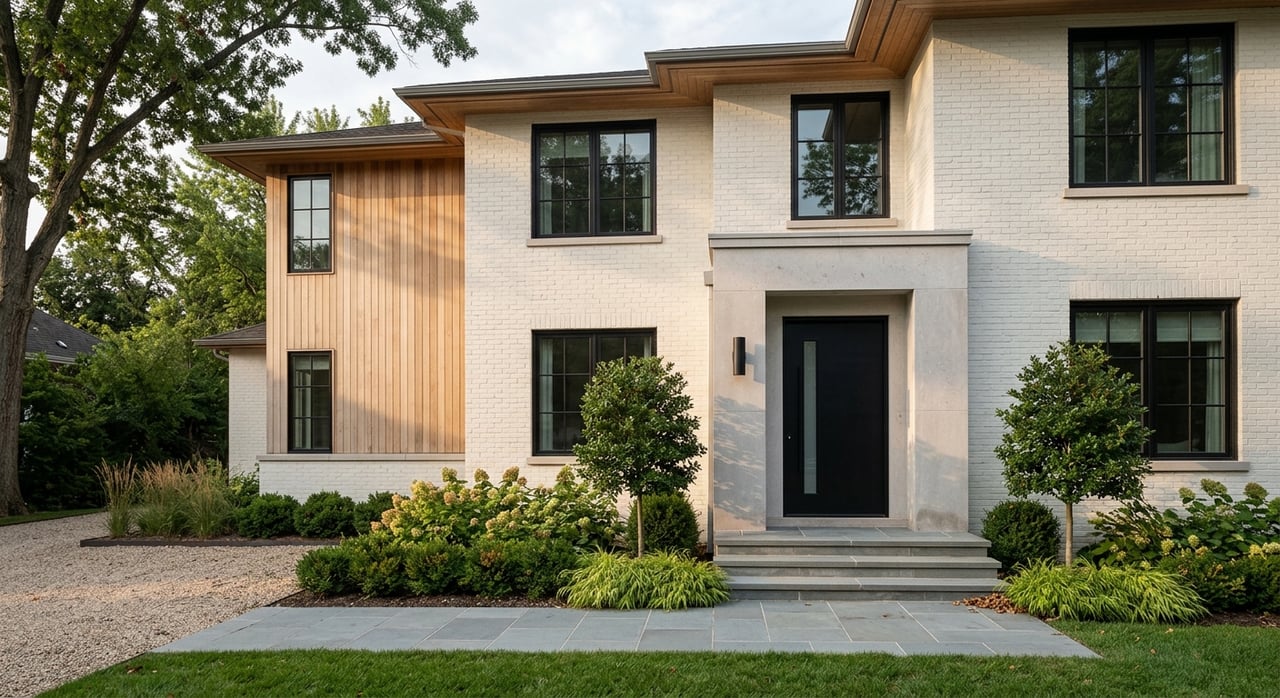
If you picture Great Falls as a place of grand homes and wooded privacy, you are not imagining a typical suburban market. This is a community shaped by land, architecture, and a long rural history, so the style of a home often affects how you live in it every day. If you are buying, selling, or simply trying to understand what makes this market distinct, knowing the key architectural styles can help you read a property more clearly. Let’s dive in.
Why Great Falls looks different
Great Falls stands apart because it has been planned and preserved as a low-density, estate-oriented area. Fairfax County describes parts of the Great Falls planning area as rural in character, with residential estates, large-lot subdivisions, undeveloped land, and open space, and future development is intended to remain very low density with two- to five-acre residential lots.
That setting shapes the housing stock in a big way. Instead of blocks of similar tract homes, you are more likely to see custom houses placed on large pieces of land, where the driveway, tree canopy, and relationship to the site matter almost as much as the home itself.
The numbers support that picture. In 2020, the Census Bureau reported a 95.0% owner-occupied housing rate in Great Falls, a median owner-occupied home value of $1,411,000, and a population density of 629.1 people per square mile. Together, those figures point to a high-value, low-turnover market centered on single-family living.
How history shapes home styles
Great Falls is not just large lots and custom construction. Fairfax County notes that the area has high potential for significant heritage resources, and it identifies places such as Cornwell Farm, the John Gunnell House, and Great Falls Grange in or near the planning area.
That history helps explain why certain architectural styles feel natural here. Some homes reflect classical forms that echo earlier local buildings, while others connect more directly to the area’s agricultural past. Even newer homes often borrow from those traditions, especially in how they present the front entry, rooflines, porches, or overall massing.
Colonial homes in Great Falls
Why colonial style fits here
Colonial Revival architecture is known for symmetry, classical entrances, columns or pilasters, and details like fanlights or sidelights. It also tends to have a more substantial overall massing than earlier colonial-era predecessors.
In Great Falls, that formal and balanced look feels at home. Local historic precedents such as Cornwell Farm’s Georgian outline and the John Gunnell House’s Greek Revival form help explain why colonial and colonial-revival homes continue to make sense in this setting.
What colonial living feels like
For daily life, a custom colonial often offers a more structured layout. You may find clearer separation between living spaces, dining areas, offices, and private rooms, along with a front-door sequence that feels formal and intentional.
That can work well if you want defined spaces for entertaining, working from home, or household routines. If you prefer one large open central space, though, an older or more traditional colonial may require more renovation to create that feel.
Who is drawn to colonials
Colonials often appeal to buyers who want a timeless exterior and a sense of order inside. In Great Falls, they also pair well with the estate setting, where a long driveway, mature landscaping, and a stately façade can create a strong arrival experience.
Contemporary homes in Great Falls
What defines contemporary design
Contemporary homes, in the residential-suburbs context described by the National Park Service, are associated with open floor plans, indoor-outdoor living, glass and steel, sliding glass doors, floor-to-ceiling windows, patios, terraces, and flowing space.
Those traits suit Great Falls particularly well because large lots can absorb bolder massing and expansive glazing. In a setting with more room between homes and more natural landscape, contemporary architecture often feels intentional rather than crowded.
What contemporary living feels like
A contemporary home usually trades formality for light and flexibility. Instead of room-by-room symmetry, you may see open gathering areas, long sightlines, and strong visual connections to the outdoors.
That can be a major advantage if you want a more relaxed daily rhythm and a home that feels bright and connected to the landscape. The tradeoff is that privacy, window treatments, and mechanical performance often matter more when large expanses of glass and open volumes are central to the design.
Why contemporary style stands out here
In many markets, a highly contemporary home can feel visually disconnected from its surroundings. In Great Falls, the lot size often gives that architecture enough breathing room. That is one reason contemporary homes can feel especially compelling here, particularly for buyers who value clean lines, natural light, and a design-forward lifestyle.
Farmhouses and farmhouse-influenced homes
Great Falls has real farmhouse roots
Farmhouse character in Great Falls is not just a design trend. It is tied to the area’s history. Fairfax County states that the Turner Farmhouse was built in 1905 as a Queen Anne style farmhouse, with character-defining features such as decorative gables and a wrap-around porch, and that it still reflects its rural association with dairy farming.
The history of Great Falls Grange also connects the area’s early 20th-century life to the dairy-farming community. While suburban development replaced many farms, that earlier landscape still influences how farmhouse style is understood locally.
What farmhouse living feels like
For many buyers, farmhouse and farmhouse-influenced homes suggest a more relaxed and practical way of living. Porches, simpler circulation, and a stronger connection to the site can make the home feel easy to use for everyday life, outdoor activity, and informal gathering.
In Great Falls, that style can carry a sense of authenticity because it reflects a real local story, not just a decorative look. That can make farmhouse-inspired homes feel especially appealing when they balance historic cues with updated interiors.
Original farmhouse or later interpretation?
Not every farmhouse-style home in Great Falls is an original farmhouse. Some properties are historic or older homes with genuine agricultural roots, while others are later custom homes or renovations that borrow farmhouse features.
That distinction matters if you are buying or selling. A home may read as farmhouse because of porches, rooflines, or material choices, but its age, structure, and preservation considerations can be very different from those of a truly older property.
Estate properties are about land and house together
Estate is a setting, not one style
In Great Falls, “estate property” is less about a single façade style and more about the relationship between architecture and land. Fairfax County’s planning guidance describes the area as one of residential estates and large-lot subdivisions, with development intended to remain at two- to five-acre residential densities.
That means the full property experience matters. The home, driveway, outdoor spaces, tree canopy, and any outbuildings can all shape value and daily life.
What estate living means for buyers
Estate properties often offer privacy, room for multi-generational living, and space for additions such as pools, guest houses, barns, or home offices. In practical terms, that scale can support a wide range of lifestyles and future plans.
The tradeoff is maintenance. Larger lots usually bring more responsibility, from landscaping and hardscape to roofs, driveways, and exterior systems. When you evaluate an estate property, it helps to think beyond the square footage of the house.
Traditional versus open living
Two broad ways Great Falls homes live
Many Great Falls homes fall into two broad lived-experience categories. Some are more traditional and room-defined, while others are more open and landscape-oriented.
Colonials and many farmhouse-derived homes often support clearer functional zones. Contemporary homes tend to emphasize shared light, flowing circulation, and volume. In either case, the estate setting can make the home feel larger because the land becomes part of the experience.
Which one fits your lifestyle?
If you like privacy between spaces, quiet work areas, and a more formal rhythm, a colonial or traditional farmhouse layout may feel right. If you want casual gathering, more flexibility, and stronger indoor-outdoor connection, a contemporary home may be a better fit.
For sellers, this distinction also matters in presentation. Understanding how a house lives helps frame the property for the right buyers and highlight the features that matter most.
Renovation and preservation in Great Falls
Think about the home’s original logic
If you are renovation-minded, one of the biggest decisions is whether to preserve the home’s original logic or reshape it for more modern circulation. That question often comes up in Great Falls because many homes either have strong formal layouts or stylistic features that are central to their character.
A colonial may invite careful updates that respect symmetry and room definition. A farmhouse may benefit from preserving site-connected features like porches and practical transitions. A contemporary home may need thoughtful attention to glazing, systems, and the relationship between open spaces.
Preservation rules can affect exterior work
This is especially important for certain older or protected properties. Fairfax County states that its historic-overlay program is designed to protect buildings with historic, cultural, architectural, or archaeological significance, and that the Architectural Review Board reviews rehabilitation, new construction, and exterior alterations under guidelines meant to preserve historic integrity.
If a property is within a historic overlay district or has protected features, that can influence what you can change on the exterior. For buyers, it is helpful to understand those factors early if renovation is part of your plan.
What this means when you buy or sell
In Great Falls, architecture is not just curb appeal. It shapes daily use, maintenance, renovation potential, and how a property is positioned in the market. A colonial, contemporary, farmhouse, or estate-style property may all be desirable here, but each speaks to a different kind of buyer and a different way of living.
That is why local knowledge matters. Reading the architecture correctly means looking at the design, the site, the history, and the practical realities together. In a market as custom and land-driven as Great Falls, that fuller view can help you make a better decision.
Whether you are comparing home styles, preparing a property for sale, or evaluating renovation potential, a design-aware local perspective can make the process clearer. The team at Property Collective brings Great Falls market knowledge, thoughtful presentation, and a sharp eye for how architecture and lifestyle come together.
FAQs
Which architectural style in Great Falls feels most traditional?
- Colonial and Colonial Revival homes usually feel the most traditional because they emphasize symmetry, formal entries, and more structured room layouts.
Which Great Falls home style usually feels the most open?
- Contemporary homes usually feel the most open because they often feature open floor plans, large windows, and strong indoor-outdoor connections.
Are farmhouse-style homes in Great Falls rooted in local history?
- Yes. Farmhouse character in Great Falls is tied to the area’s dairy-farming past, and Fairfax County identifies historic examples such as the Turner Farmhouse.
What makes an estate property in Great Falls different?
- In Great Falls, an estate property is defined as much by land, privacy, and site planning as by the house itself, especially in an area known for large-lot residential development.
Should buyers renovating older Great Falls homes check preservation rules?
- Yes. Fairfax County’s historic-overlay program can affect rehabilitation, new construction, and exterior alterations on protected properties or in overlay districts.